Saturday, 7 May 2016

DONE DONE AND ...DONE

"There is a massive wildfire in northern Alberta and it is heading directly for Slave Lake!" 

That was the voice of Peter Mansbridge on "The National" 15 years ago. 

As the Chisholm fire approached our town, our mayor's reassuring voice was heard on local radio every 15 minutes, informing us how far away the fire was and how fast it was travelling. Then it was "Be on standby..." and then "Be prepared to evacuate immediately..." Treasures gathered, we stood with our neighbours on doorsteps and driveways, watching the sky as ash and burned pine needles rained down on us. 

Then winds changed, the welcome smell of rain...and we were safe.

The welcome smell of rain from my driveway, May 2001
Five years ago today, another massive wildfire headed directly for Slave Lake. This time, no reassuring words from the Mayor. No regular updates. Just an occasional "Slave Lake is NOT on evacuation notice" on local radio and no mention whatsoever on any news network. 

Still we gathered on doorsteps and driveways watching the sky. 

The terrifying sky, from my driveway, May 15 2011
The terrifying sky. 

Then the power went out and the radio fell silent. And still no emergency alerts. And then we were searching for our families and getting into our vehicles, driving through smoke and wind-born cinders and fire, roads blocked in all directions, until highways re-opened and we joined the long lines of traffic to welcoming communities wherever we found them.

Two weeks later we were home.

Those of us who had houses to go to were greeted with a pail of cleaning supplies and a packet of instructions, including signs to put in windows to alert utilities companies when services had been restored.  Seeing the signs "DONE. DONE. DONE. DONE." meant your house was back to normal and you could go on with your life. We looked for those signs. 

We wanted it to be done. All of it. We wanted everything back the way it was. 

These are old stories for Slave Lake. 

Stories we told.

Stories we shared. 

Stories that are now part of our history as individuals and as a community. Stories we thought we were done with.  Until images of the Fort McMurray fire flooded our media channels, our hearts, our minds and our guts. A friend emailed me. "I can't stop looking at the pictures. I'm mesmerized. And I smell smoke." Another said, "I felt physically sick. Like a punch to the stomach." My normally calm daughter who lived through our fire and now lives elsewhere told me she started shaking and she couldn't stop.Suddenly it all came flooding back. We relived it all over again.The escape. The relief of learning no one was lost. The not knowing. The brutal return. The devastation. The loss.

You think you're done. 
You think it's all back to normal.
But you're not done.
The fire and all that came after is part of you now. Part of us.
You'll never be done. 
Would you want to be?


Thursday, 5 May 2016

What not to say

I said some of these things a few years ago. It's too late to take them back. But not too late for others who might be dealing with those who have just been evacuated from Fort McMurray.

Don't say...
  • Did you lose your house? People lost more than a house. They lost the place where they could close the door and just be themselves. They lost the life they used to live and their dreams of the future they planned on living  But everyone loses something in a disaster like this. Your community is never the same. You lose neighbours and friends. You lose a sense of security for yourself and your family.
  • They're only things. The only people allowed to say that are those who experienced the loss. Our possessions are more than things. All the furniture and nicknacks and mementos and artwork and journals and books and photos. The things that were passed down from the previous generations. They are history. They are memories. People are allowed to grieve for them.
  • At least no one died Okay, it's true. It's a miracle. We all know it. We all celebrate it. But by saying it we minimize the trauma people experienced. We may make people feel bad about feeling sorry for themselves even though they are entitled to do so.
  • Insurance will pay for it Insurance comes with its own set of headaches. Imagine sitting in a room with someone you don't know for hours and possibly days listing every single possession you owned. Remembering everything you lost. Then fighting to get compensation.And forgetting to list things that you now won't be compensated for. All while still in a state of shock.
  • You'll get a brand new house! These people mostly did not build the houses they lost. They did not choose to rebuild again. Now they are faced with a million decisions from finding a contractor who won't gouge them or go bankrupt mid-build or leave them with more problems than the old house, to choosing floor plans and appliances and paint colours and door pulls and furniture. All the while thinking of everything they no longer have to put in this new house.
So what should you say?  

"I'm so sorry."

"How can I help?"

Or just listen.

That is enough.


Tuesday, 3 May 2016

Take Courage, Fort Mac

What is courage?

Courage is the wildland firefighter who stands in swirling flames, fighting the fire. Courage is the last nurse making sure her patient is safely evacuated. Courage is the pilot who descends time after time to dump water on the flames. Courage is the cop who stands in wind and smoke and debris, directing people to safety. But courage too, is the neighbor who let you into the line of traffic so you could make your escape. Courage is the volunteer who came to rescue your dog. Courage is the unknown man who gave you his gas so you could drive away. Courage is driving past the flames, through the dark, without food or water, not knowing what awaits. Not knowing where your friends and family are. Courage is waking up tomorrow, not knowing if you have a home to return to.

Have courage, Fort Mac.

Because you will find courage comes from the smallest of things. It seems bleak now, possibly as bleak a time as you will ever know.  But you will find hope in the days and weeks that follow. You will find it in the homes of hundreds of people who open their doors to you. In the meals cooked by volunteers. In hugs from total strangers. In the companionship of those who cry beside you. In the new friends who will share your journey. 

Take courage.

We have been where you are. We know you have the strength to overcome.

Sincerely,

Slave Lake
Rebirth of a forest after the Chisholm Fire


Monday, 2 May 2016

I just can't wait

400 middle aged white guys met in the middle of the province, vowing to form a new party to defeat the NDP in the next provincial election.

They want a return to the past where middle aged white men were in charge. Guys such as the pouty millionaires who begged us all to vote PC last April. Perhaps then, and only then, when the wealthy and entitled "Look in the mirror" PCs and the homophobic, climate science denying, "we-don't-have-a-social-policy" WR,and all the "commonsense conservatives" join together, can the voice of the centre-left be terminated.

They call themselves "Albertans Can't Wait". 

I don't know what it is they can't wait for. 
#WeAreAlberta is their hashtag. If you're not with them, apparently, you're not an Albertan. See all those tiny flags?  See how much they love Alberta? More than I do I guess, since I don't go around waving a flag, wearing my heart on my sleeve, or proclaiming how patriotic I am.  

Grande Prairie's Chris Warkentin says "
This kind of enthusiasm hasn’t been seen in provincial politics for decades."  


Hmmm. 

Maybe he doesn't know what excitement looks like.

Or maybe he was dozing in his comfy MP chair when more than 700,000 people didn't vote conservative a year ago.  I seem to recall a lot of excitement then. From those who threw out the PC government and couldn't stomach the Wildrose. 

Or maybe it just doesn't seem like excitement it it's not waving a damn flag.


Back in 1970, the Brotherhood of Man penned the following: 
United we stand...divided we fall....And if our backs should ever be against the wall....We'll be together, together you and I
Take another listen, Albertans Can't Wait. Do you really think Albertans need another right wing party?

As for me, I know what it is I can't wait for.

Five parties on the far right. 

Just in time for the next election.

Wednesday, 27 April 2016

Gently Down the Stream

Jan, Yvonne, Teresa, Me
Every evening we go for a walk past the Sawridge Creek.  Usually at this time of year there is almost enough water for a small boat, just like the creek in the town where I grew up.  

Forty years ago this spring, my friends Jan, Yvonne, Teresa and I entered the South Peace boat race. The boat race was a yearly thing in our high school. Canoes, rowboats, kayaks, inner tubes, loose boards lashed together with rope-anything that would float.

A staggered start. We launched our craft through the double culverts under 17th street and paddled down the twists and turns of Dawson Creek, under the bridge, past the clusters of stoners chilling in the April sun, past the library, finishing up in the park just beyond the hospital.  

We were confident.  We had my dad's aluminum rowboat. We were sure we had it all under control.  Until we hit the water. We spun around several times before crashing into the concrete between the culverts. Then we floated helplessly backwards till we emerged on the other side.

We got caught up on deadfall. Couldn't make the boat go straight. Had to haul it over fallen logs. Endured the jeers of the spectators on the creek bank. Mostly we laughed. 

But we didn't dump. A few others did. I don't recall any hospitalizations or injuries besides a few bruises and maybe a bit of exposure.  Randy Soderquist won in his canoe with a time of 26 minutes. We finished up with a time of 1 hour and 40 minutes.  The longest time in the water of any team before or after.

"After" wasn't long since the boat race was cancelled due to liability issues.

A little creek in a little town. A few kids. A lot of fun.

All gone but for the memories.

Wednesday, 20 April 2016

Jason has a book

What is pedagogy?  

I was at a meeting this morning where we talked about "best practices" and "challenges" and file names for quiz questions and linking questions to outcomes and whether each distracter in a multiple choice question should be capitalized and invoices and contracts and templates, banners, headers, training, and standard's manuals.  The last 15 minutes was scheduled for a discussion on teaching presence in online instruction, a topic near and dear to my heart. We didn't have time for that item.

Years ago I asked our staff to define what they meant by "distance education pedagogy". The response? "Jason has a book." Yeah.  I am sure Jason does have a book. Jason has a lot of books.

A friend of mine was at an in-service awhile back. The topic of pedagogy came up. "Isn't it 'teaching methods?' a new teacher asked. One of those "higher pay-grade than you" people told the group no, pedagogy is about outcomes.

Two good questions, two bad answers.

Is real teaching that hard to define?

Looking at its etymology, the word literally means 'to lead the child.' 

Merriam-Webster calls it the 'art, science and profession of teaching.'

In 2016, the government defines pedagogy as "'..the styles and methods of instruction used in the teaching profession, including grading practices, assessment, and instructional strategies.' Alberta Education.

Well. 

Pretty darn nebulous.

Art and science and methods and practices and professionalism. Can something be both an art and a science? What methods work? Which practices are good? Do some instructional strategies result in optimal learning for all students, or do some work better for certain kids- and for certain teachers?  Even in the now infamous report of the Task Force on Teaching Excellence, "excellent" teaching was never defined. 

And that made me think about what one of my aunts said, after 34 years of teaching grade one.  I asked her how she taught kids to read. "I have no idea," she said. "I try lots of things. Then one day they just start reading."

Pedagogy is discussed at length in academic papers, books and universities, but in my experience, real teachers rarely have the time or energy to talk about it. Why don't they feel like they are experts in the thing they do every day?  

Maybe they don't have time to read Jason's many books. Maybe they cannot put into words what it is that they do.  

Maybe they just know when they are doing it.


Think Like a Teacher

What does it take to be a leader? Because I am a teacher, I think about the skills teachers have that equip them to lead. Are there lessons that political leaders in Alberta could learn from teachers?
My dad, former teacher, school administrator and Mayor of Tumbler Ridge
A lot of my fellow teachers don't have confidence in their leadership abilities but in my small town, teachers are not just the leaders of their large and complex classrooms; they are often leaders in community groups and other nonprofit organizations. They frequently spearhead innovative projects that make our community a better place. Sometimes they enter politics. My own father went from air force pilot to engineer to teacher to principal to assistant superintendent to healthcare administrator to alderman and later, mayor of Tumbler Ridge B.C.

Some of my relatives don't think much of teachers. When Justin Trudeau was elected they said "Trudeau never held a real job in his life, what equips him to lead?"

For those of you who have never taught, let me assure you teaching is a very real job. A job that requires a myriad of skills that equip people to lead. Teaching requires logistical and organization skills, communication skills, and a thick skin. These are skills all leaders require.

The more you teach, the more you get stuck in the mind set of thinking like a teacher. As Justin Trudeau said shortly after election, "Being a teacher is who I am. It's the way I see the world, the way I understand it..." His recent mini-lecture on the basics of quantum computing exemplifies this worldview.

What does it mean to "see the world as a teacher"? Is it really a worldview? Is there such a thing as "thinking like a teacher?"  


I say there is.

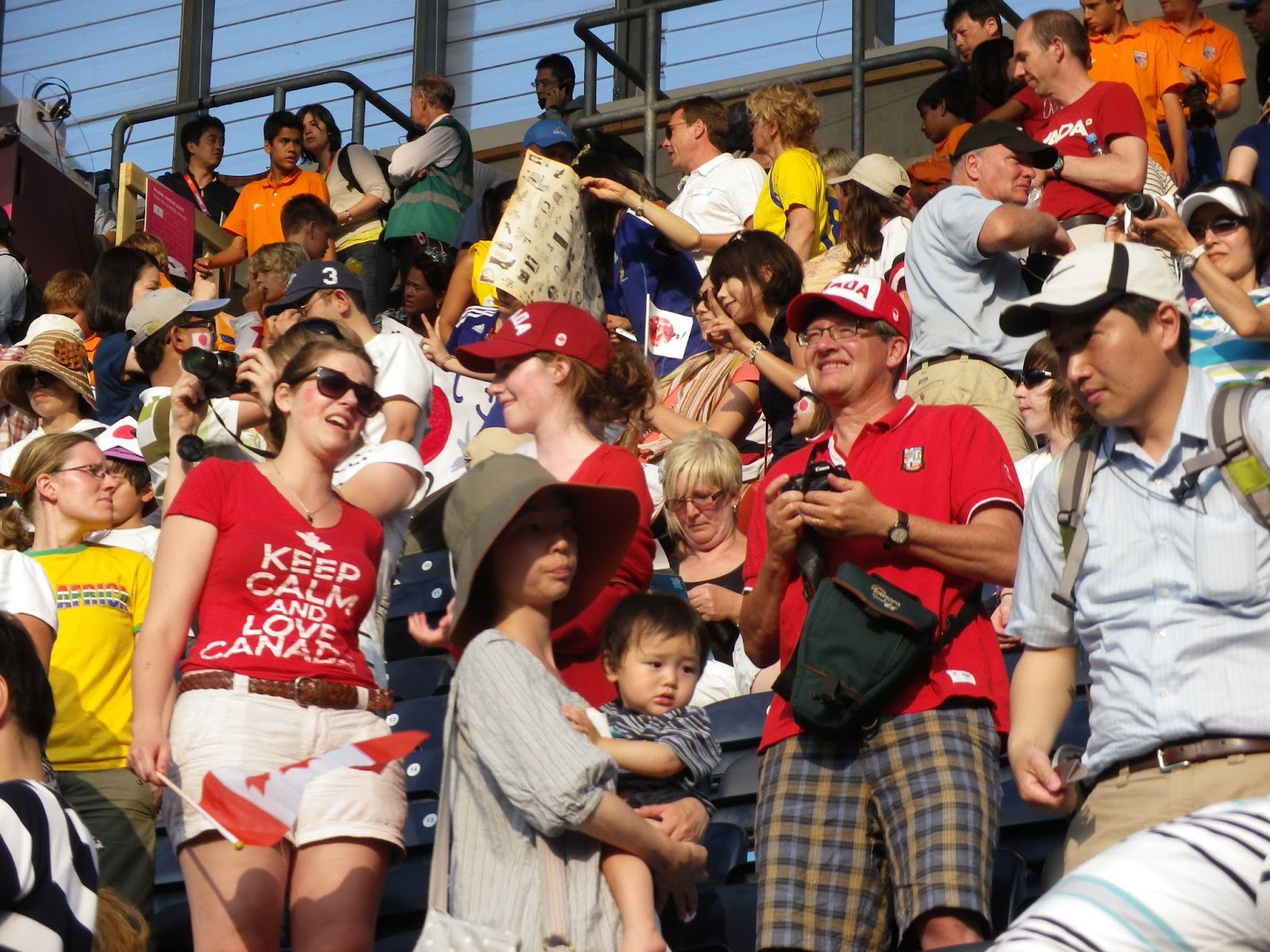
In the summer of 2012 I attended an Olympic Soccer event in the UK. Thousands of people congregated in confusion outside the Coventry Stadium. No signage. No people on hand to say "If you are carrying a bag, you must go through this line for security. Then you must go all the way around the building with your security clearance to enter." People were milling around, frustrated and confused. They would get in one line only to get to the front to be told they had to stand in another line. I said to my husband "If the teachers at CJ Schurter had organized this, this wouldn't be happening." Why? Because experienced teachers speculate on every possible way some thing could go wrong. Teachers would walk themselves through each step of the process, thinking of the pitfalls along the way and coming up with solutions to prevent them.

Teachers see disparity and diversity first hand every day. It's not something they pay lip service to-they live it. Their students are culturally and linguistically and personally unique. They have social and economic differences. They do not have all the same benefits. They don't all start from the same place. As teachers, we see it as our job to give all our students the opportunity to succeed as individuals in society, no matter what their starting place is. That is just part of how we see the world. Sure some teachers get jaded and tired and frustrated. But recognizing our differences is the place we start from.
Drafting boards at South Peace Secondary, Dawson Creek. 1967

Teachers think about how to share ideas. You'll be sitting with your teacher friends watching the Superbowl and someone will say, "You know, you could use that ad to teach such and such a concept." Your retired friend says "I don't think that way anymore." A year later he's back in the classroom. Because he does think like that and he always will. Sometimes "thinking like a teacher" leads to the offering of unwanted advice or the correction of people's grammar or the pointing out of misunderstandings about politics. It might not make you popular, but you just can't help yourself.

Teachers know people don't all think the same way. Not just kids but their parents and their peers have different background knowledge and different values and beliefs. Thinking like a teacher means speculating on gaps in understanding.  It means knowing that people have misconceptions.  It means asking yourself "How did [that kid/my neighbour/Alberta's Plebiscite Warriors/the fools on the Facebook Discussion forum] come to that conclusion?" 
Even Alberta Education knows that is what teachers do.

When a teacher begins a lesson, he or she knows what errors in thinking a student may bring to the subject.  A grade seven teacher knows many students will think "a lot" is one word or the word "month" has a "u" in it.  High school teachers know kids might not remember what BEDMAS is, or think Hitler was a communist, or believe the government is to blame for the falling price of oil. 

One thing I have learned in past 30 years is that if there is a way to misunderstand something, someone will misunderstand it.  If there is a distracter in a multiple choice exam that I think no one would ever select-no matter how ridiculous- someone will select it. Guaranteed. 
My great aunt Margaret who taught junior
high special ed in the Peace Country

These are skills teachers have. Today's leaders should try to "think like teachers." When they roll out legislation, think about the diversity of the population. Think about the best way to teach people why this legislation is necessary. And ask "What preconceptions and misunderstandings might citizens bring to this new bill? What possible ways might they misinterpret its intent or implementation?"  

Once leaders have analyzed the misunderstandings, make preemptive strikes. Plan for successful implementation. Don't assume people will understand what you are trying to do. Communicate clearly. Have a back up plan if things get derailed.

You know what?  Being a teacher-like being a leader-often sucks. You are judged from morning till night by everyone. Kid failed an exam? Your fault. Kid misbehaving?  Your fault. Economy in the toilet?  Your fault.  Kid won a scholarship?  Good for him! Economy booming?  Thank industry and the hard workers of the province! The fact that people think that way is something else you accept as part of your worldview.

Thinking like a teacher won't stop the personal attacks. But it might prevent misunderstandings. Think about the diverse citizens of this province and the many ways in which they see the world before you even begin to implement your plans.

Think like a teacher.

Sunday, 17 April 2016

Separation Anxiety: A Critical Analysis of the Websites Alberta's Separatist Organizations

With Illustrations

The Official Flag of the Republic of Alberta. 

Abstract

Alberta joined the Canadian federation in 1905 and Albertans have tried to declare their sovereignty ever since. The first efforts to establish Alberta as a unique member of confederation began in the 1930s under the Social Credit government which wanted to create its own banks and issued Alberta "Prosperity certificates." 


Various other movements-many erroneously calling themselves"political parties"-cite historical and contemporary grievances and the injustices and oppression suffered under the Canadian regime to promote Alberta's independence either as its own nation, as a new federation of western provinces, or as the 51st state of the U.S.A. While the notion of Western alienation may predate emergence of the World Wide Web, separatist movements have used the power of The Internets to advance their cause. How well do separatist movements capture the power of the web to promote their views? While principles of web design have evolved since the origin of the internet, have such principles extended themselves to the websites of these organizations? This paper examines separatist websites and correlates the validity of their claims with their adherence to web conventions.


Introduction

Love Alberta? Give me
Money!
Western separatism has its roots in the emergence of the Social Credit Party in the 1930s. Grievances such as the delayed development of a railway line and tariff walls on tractor importation were early examples of complaints Alberta had with the motherland. The concept of secession from Canada experienced a resurgence with the NEP of the 1980s. In 1982, the fledgling Western Canada Concept party elected MLA Gordon Kesler to the legislature in a by-election. Just months later Kesler was defeated in a general election. 12% of the public voted for the WCC. The NDP became the official opposition and the WCC elected no one.

The idea truly came into its own with the election of the Liberals in 1993 just after the very first website on the WorldWideWeb was published by Tim Berners-Lee. Early separatist adopters of the web were quick to use the power of the web to reach out to potential supporters.  Many of them have never changed their websites since those early days of nausea inducing animated GIFs. 

Only one of these organizations is a registered political party in Alberta.  Originally called the Separation Party of Alberta, it changed its name to Alberta First in 2013. It does not have an active website and ran no candidates in the 2015 provincial election.While more recent incarnations call themselves political parties, they have not registered as such with Elections Alberta.


Methodology

To complete this research I used highly scientific methodology and advanced algorithms to rate each organization in terms of content and web design using the highly regarded Canadian "plus/minus" or "+/-" rating system.
Free Alberta uses virtually every symbol of Alberta in this header
Plus points were awarded for overgeneralized statement about transfer payments, AKA "money stolen from Albertans", references to the uniqueness of Alberta's  pioneer culture, inaccurate claims to be a political party, ideological statements related to either Prime Minister Trudeau, reference to the NEP, third party advertising,invalid comparisons with the U.S. political or economic systems, solicitation of non-CRA receiptable donations, and the selling of merchandise.

Buy this classic thong to
support Alberta's secession from
Canada!
Contact Us? Contact Jefferson at his house. In Bermuda.
Minus points were awarded for factual statements about the economy, historical accuracy, the voice of reason, any reference to indigenous people in any context (none found), evidence of the desire to form a political party,actual names and contact information for organizers (special mention to Jefferson Glapski of Free Alberta, who provides directions to his house in Bermuda on his personal website), any indication the site was updated in the past 5 years, and a platform or guiding principles.

Chris, Todd, Rick, Nick and Larry of the
Alberta Independence Movement have a platform. Unlike other separation "parties".
Web Design  The following elements of web design were analyzed and each site was rated according to the plus/minus system with plus points as follows:multiple fonts, font sizes and font colours on the same page, abuse of white space, abuse of Hick's Law and,Fitt's Law,broken links, low resolution images,distractions including animated GIFS and jingoistic photos of mountains, flags and the legislature.


"Canadian Prime Minister Justin Trudeau believes Alberta's cultural values are so radical that no one from Alberta should be allowed to be the Prime Minister of Canada."
-Alberta Republicans 

Minus points were given for ease of navigation, appropriate visual hierarchy, intuitive site architecture,simplicity, active Contact Us and About Us pages (a link to email Ralph Klein doesn't count, sorry Republic of Alberta),links to active social media accounts,consistency and use of original and appealing images. (Unless they are of mountains. Enough already!)

Correlation A rating for each organization was calculated using the plus/minus rating correlated to determine a relationships between the two variables using Spearman's rank correlation as follows:

The raw scores   are converted to ranks , and   computed from:where
denotes the Pearson correlation applied to the rank variables where  is the difference between the two ranks of each observation.

Results can be seen in Table 1.


Table 1.

Conclusion

Is his face blurred out
for a reason?
Each group uses the World Wide Web to advertise its presence with varying levels of competence or observations of internet protocols. The findings of my research indicate a strong correlation between style and substance. Sites with inaccurate and misleading information about the relationship between Alberta and Canada closely correlate to those that demonstrate a faltering understanding of web conventions. In many ways their limited understanding of design conventions mirrors their understanding of political and economic systems in Canada.

Bibliography


Alberta Republicans do not intend to form a political party, but they intend to run candidates in upcoming federal and
provincial elections to "Put a boot in Trudeau's patoot."

Tuesday, 5 April 2016

ABCs of Easter

A little driving holiday in Alberta and B.C.  Here are some highlights:

A  Arrowhead Brewing in Invermere. TIP: try the Coffee Porter Stout!
B  Bluestar Diner, Calgary. Very chill. Time to up your game, Edmonton.
C. Canmore. Just. No.
D  Dandy Brewing, Calgary A nanobrewery in an industrial area of Calgary with a tiny bar. They plan to produce 40 different beers this year. TIP:Don't miss the Szchechan Peppercorn

E  Egg Hunt Because you can't have Easter without one. Too bad we just had one kid home to hunt for eggs. The one whose name starts with E.
F  Fernie Brewing  TIP: Lone Pine IPA!

G  Gregg Lake  Peaceful as ever. TIP: Don't let your dog follow cougar tracks into the woods.
H  Hot pepper jelly, Kootenay produced. TIP: Try Dales Roasted Garlic and Jalepeno or Strawberry Rhubarb Habanero.
I   Icefields Parkway. TIP: Go see the icefields before they disappear!
J  Junofest.  Sponsored by the CBC. We attended "Outlaws and Gunslingers" at the Calgary Legion #1 featuring Fortunate Ones, Jim Cuddy and more. TIP: Don't buy the wristband. Buy an advance ticket to ensure getting in!

K. Kicking Horse Coffee. Roasted right in Invermere! Buy it cheap at the grocers!
L   Lesser Slave Lake Provincial Park. Still a great place to walk in spring.

M  Meet on Higher Ground Coffee Shop, Radium.  Funky vibe, great coffee. TIP: Want to buy a coffee shop?  This one is for sale for a mere $149,000
N  National Parks. All good, all the time. TIP:Take advantage of Radium Hot Springs, still a deal at $6.30
O Old Salzburg Restaurant,
Radium. TIP: Ask for a table by the window for spectacular valley views. And don't miss the schnitzel.

P  Park Distillery, Banff  TIP:Try the espresso vodka
Q  Q. Like, the podcasts. Don't drive anywhere without a podcast!
R  Ralph Klein Park in Calgary. A human-built marsh to collect spring runoff and prevent pollutants from entering the river. TIP: No dogs. Closes at 4. No birds.

S  Stolen Church Coffee Roasters, Invermere  TIP: A bargain at the Invermere Grocery Store, $11.49!
T  Taste of Bragg Creek.  A yearly event where all the food and beverage sellers in the community offer deals.  TIP: Check out the liquor tasting
V.  Valley views. Like the view of the Columbia Valley from our balcony on the very affordable Radium Springs Hotel. TIP: Great Hungarian restaurant on sight.
W. Walking. Juniper Trail, Redstreak Campground, Johnson Canyon, Athabasca Falls...TIP:Go south.  There is NO SNOW there!

X.  Xtra-cool studios, arts and artisans in Invermere. My favourite? Black Star Studios with a whole area where kids can make stuff.
Z   ZZZ...time to rest!


Athabasca Falls

Athabasca Pass View with Raven

Spring Thaw, Gregg Lake

Monday, 4 April 2016

Radium

"My dad taught me to swim in Radium Hot Springs," I told my husband a couple of days ago as we soaked in the hot pool after hiking the adjacent Juniper Trail. "It looks just like I remember it."

I remember.

A sunny July day in the 60s on one of our many family camping trips with our giant canvas tent. 

I remember going for a swim at the pool, me jumping off the edge into my dad's arms as he slowly backed away. My bathing suit- navy blue with a white pleated skirt. Nothing like the string bikinis on the crowd of American teenagers, much admired by my dad. Nothing like the only bathing suit I remember my mom wearing, a scratchy orange thing with a blouson top. My mom who notoriously hated the water was sitting in the shallow end with my brothers and sister- my sister who was soon to lock herself in a big wooden locker in the change room, causing great consternation as no key could be found.

My parents had already made me take swim lessons in the Dawson Creek Public Swimming Pool, a hideously ugly 50s utilitarian pink concrete block that was freezing cold and too deep for a child to stand up in. Swimming lessons were to be endured, not loved with the carefree joy I experienced in Radium. Soon that concrete block was demolished and replaced by the indoor Centennial Pool a few blocks away, the place where my siblings learned to swim. Many hours were spent there during our years with the mighty Dawson Creek Seals, That, pool too has been replaced by a newer and more modern facility. 

A piece of my history gone.

My husband learned to swim in Edmonton's Hilllcrest Country Club, one of a series of family clubs built in the city in the 1960s. Like the Derrick and the Royal Glenora, these once affordable family clubs proved unsustainable and became private members only clubs. The Hillcrest fell on hard times and was eventually sold to become a  fancy Jewish community centre. 

Just last week on impulse I used Google Street view to find photos of the house I grew up in. I showed my sister.  

"That's not the house I grew up in," she said. "The house I grew up in was a castle."

For such was the house we so dearly loved with its enormous entranceway and its open staircase and its modern European-style ash cupboards and its copper light fixtures and its fireplace that was open on both sides, one for the dining room and one for the long living room- the living room with its marvelous hardwood floors perfect for sliding along all the while yelling "Hockey Night in Canada!"

Someone else's house now. Someone who painted it green with a red door. Someone who took out the poplar and the red willow and the tamarack my parents transplanted from the bush. Someone who removed the retaining wall built of reclaimed bricks from the burned down high school where my dad worked.  But at least it is still standing, unlike my dad's lovely Arts and Crafts bungalow in Vancouver, replaced by a pink stucco Hong Kong monstrosity. Unlike my husband's childhood home which early one April day a year ago was loaded onto a flatbed truck and trundled off to Saskatchewan to become someone's summer cottage.

Just that morning I had received word that my mom's estate was finally settled and soon my siblings and I would receive the last tangible bit of her legacy. All that remains of her.

So much of this life is transient.  

So. Radium. With your cold pool and hot pool and stone change rooms virtually unchanged in over 50 years. 

Here's to you. 

Thank you Parks Canada.